

What is a connected car?
A connected car is a vehicle equipped with internet access and often a wireless local area network (LAN) that allows it to share data with devices inside and outside the car. In simpler terms, it’s a car that can communicate — with other vehicles, infrastructure, cloud services, or even your smartphone.
Some of the key features of a Connected Car would be 4G or 5G connectivity, or satellite connections. This connectivity enables telematics and data sharing to a dedicated server, allowing vehicle status data (fuel level, tyre pressure or location) to be shared. The connectivity allows the vehicle to benefit from real-time navigation, weather and route optimisation from the same server, offering benefits to the vehicle users. The connectivity also allows for entertainment content to be served in the car, such as audio streaming, travel apps or bespoke navigation tools.
A Connected Car may also communicate to other places, such as other vehicles, transport infrastructure, pedestrians or the cloud. These communication channels promise enhanced safety, less congestion and hassle-free toll payments. Cloud-enabled features also let the user remotely access vehicle systems, to lock or unlock the vehicle, control Air Conditioning or Battery Charging, for example.
A Connected Car can benefit from Over-The-Air (OTA) updates, remote diagnostics and automated emergency support.
Why is a car connected?
The reasons to connect a car to the internet include safety, convenience, comfort, efficiency and reliability. On the safety side, Vehicle to Vehicle (V2V) communication can help mitigate collision risks, either by direct communication or using so-called swarm data to highlight dangerous road conditions. If an accident occurs, the connected car can automatically contact the relevant emergency services with pertinent information. The provision of better driver alerts are made possible, to warn of poor road conditions, traffic or other approaching hazards.
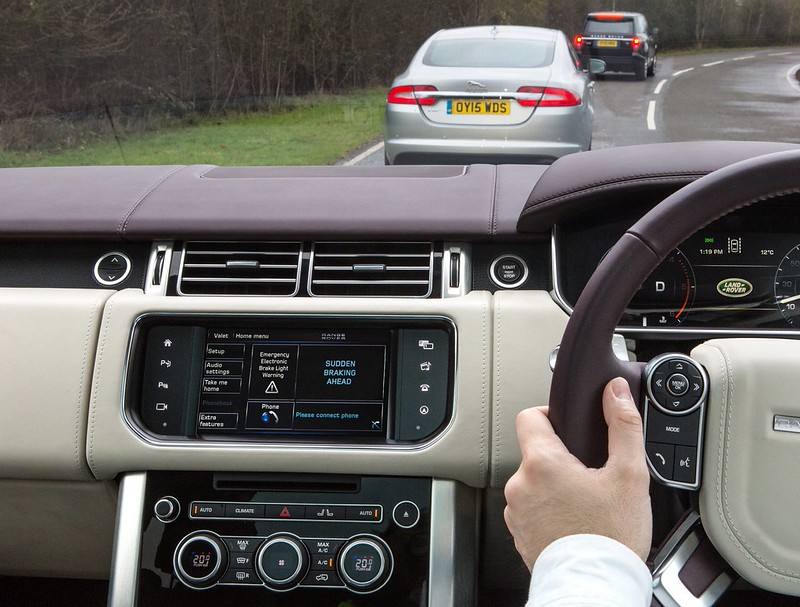
Fig. 1 – Driver Safety Alert, using vehicle to vehicle connectivity.
Comfort and convenience can be enhanced by access to vehicle systems, as mentioned, but also integration with smart homes, and can offer personalised audio, navigation and virtual assistants.
Vehicle efficiency can be improved through real-time navigation data, as well as diagnostics data to optimise vehicle systems (such as battery temperature pre-conditioning before a visit to a high power EV charger). Vehicle reliability can also benefit from remote analysis of vehicle data, to allow better maintenance and fleet management for current drivers, and potential design insights for future vehicles from wider and deeper data pools.
But another reason that cars connect relates to how data pools can be used (“data is the new oil’) One motivation for companies to gather data is that data can be monetised. In many other aspects of modern life, data harvesting has yielded strong financial benefits to those who control the data, and insights generated can lead to further financial opportunities. These aspects may not be front and centre of the pitch to car buyers, but the effect is well documented.
Who does the car connect to?
The short answer is “The Cloud”. But a more useful answer might be OEM servers to enable those OTA updates and remote diagnostics, as well as some online services (maps, AI assistants). A connected car can also communicate with other vehicles or road users, to improve situational safety or efficiency. It might also connect to road infrastructure to improve traffic flow or information, and potentially pay tolls automatically. Finally, the Connected Car talks to nearby devices, either from passengers or nearby pedestrians, or other smart devices such as chargers, automated garages or gates, or fleet infrastructure.
When did we first connect cars?
Before we had the phrase connected car, we did have internet-connected vehicles, and on-board wi-fi hotspots have been with us for a while. The first widely adopted system was GM’s OnStar, offered first in Cadillac models in 1996. This initial service offer allowed remote concierge service, automatic accident reporting and navigation support. The remote concierge could unlock the car, flash lights and sound horn, and also locate the vehicle if it was stolen.
By the end of the last century, many premium OEMs had similar offerings, and the technology become more accessible. As we approach 30 years of connectivity, the offerings have become more sophisticated, cheaper and faster. Over 10 years ago, the EU passed legislation requiring the eCall emergency caSince 2018 in Europe, the eCall functionality is mandated, meaning every car entering the market since then has connectivity of some form.
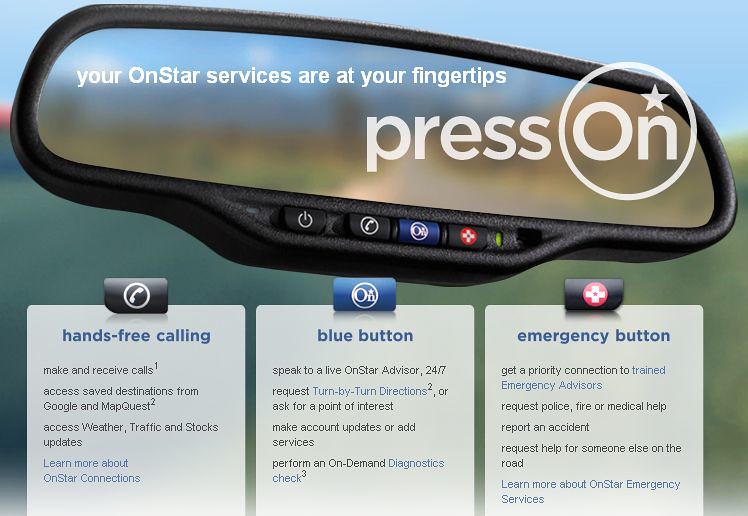
Fig. 2 – OnStar service offer
What can go wrong?
Well, the short answer is a lot. The main downsides relate to who controls the data, and how secure the data can be. Another important downside can be unexpected changes to vehicle functions, which may have adverse consequences for drivers.
Looking at data ownership, it is worth to consider that data privacy laws are not universal, so the potential use of this data has different implications in different regions. The EU has rules on the use of data (GDPR) and has recently introduced specific rules on connected devices including cars. In the US, a recent measure to limit overseas storage of connected vehicle data was introduced for national security reasons. In both jurisdictions, the location where user data is stored is limited to within the borders of the government, in the interests of citizens.
Looking at data security, it is worth bearing in mind that a connected car can generate up to 25Gb of data per hour, meaning significant amounts of data exist. The Mozilla Foundation researched the topic, and highlighted serious shortcomings.
Considering where data is stored also has implications for vehicle function. The most glaring is the availability of the data connection. If the company that sold the vehicle ceases to exist, there is no clear path to ensure the functionality of the vehicle. In the case of Fisker Motors, and WM motors, this has already lead to serious issues for owners. As servers were no longer funded, owners were left without any connectivity, effectively stranding them. Even for viable companies, the loss of a server can severely disrupt the vehicle operation. Even in more prosaic instances, a SW update can lead to less vehicle functions. Incomplete SW updates also pose a problem, where unexpected and unvalidated functional constellations can be created.
Notable mishaps
Another significant risk to all this gathered data that data leaks occur. In a high-profile example of this, VW inadvertently exposed the location of 800,000 vehicles. This example is one of many, but not the only vulnerability that exists. Data leaks of customer data, which has affected the likes of Kia, Tesla, Toyota and others, could allow an attacker to gain “remote ownership” of the vehicle, and easily unlock and potentially operate a vehicle using purely digital means.
So access to the vehicle via connectivity can easily enable or disable those remote functions. But it can go further as well. Over a decade ago, white-hat hackers were able to take significant control over a Jeep vehicle, manipulating steering, brakes and ultimately cutting the engine while the vehicle was driving on a highway. While this weakness was eventually addressed, the intervening decade has seen more vehicles becoming connected, and far more people motivated to find “exploits”.
EV chargers are another area of connectivity to consider – with most charging networks relying on connectivity as a foundational element of their operation. This isn’t lost on hackers, and evidence suggests that the research efforts in this area is one of the fastest growing security topics in automotive. While a wide-spread public incident hasn’t surfaced yet, the existence of vulnerabilities in various networks are well-documented.
While it’s outside of the scope of this article, it’s worth noting recent hacking events suffered by automotive companies, which have resulted in dealer networks, distributors and even whole factories being held to ransom.
Conclusion
We live in a digital age, and that means more and more of our lives are somehow online. We may not have made a conscious decision to move our vehicles online, but regardless, most vehicles are now mandated to have a minimal level of connectivity.
These connected vehicles are collecting vast amounts of data, often to the benefit of the owner, but it seems unclear that all data collected is benefiting the owner. Fair, foreseeable and consented data usage is not a topic that’s unique to automotive, but the growth of connectivity in vehicles does bring unique challenges.
Securing the data that is generated is critical, and strong encryption of remote access platforms must be a pre-requisite for every connected vehicle. Legislators are increasingly concerned by the topic, including geopolitical consequences.
While this article lays out some of the cornerstones of connected cars, topics such as on-board cybersecurity, remote piloting and fleet-wide vehicle manipulation weren’t explored. We didn’t consider the emissions impact of storing vehicle usage data (vs. the projected efficiency gains). We didn’t fully explore the loss of critical safety functions, and what current best-practice looks like for building a resilient vehicle. We didn’t explore how a resilient and fault-tolerant connected vehicle might need to be built. These topics are for a future article, now that we’ve laid the foundations.